The Classroom Conundrum: Is Public Education Shaping Minds or Molding Them?
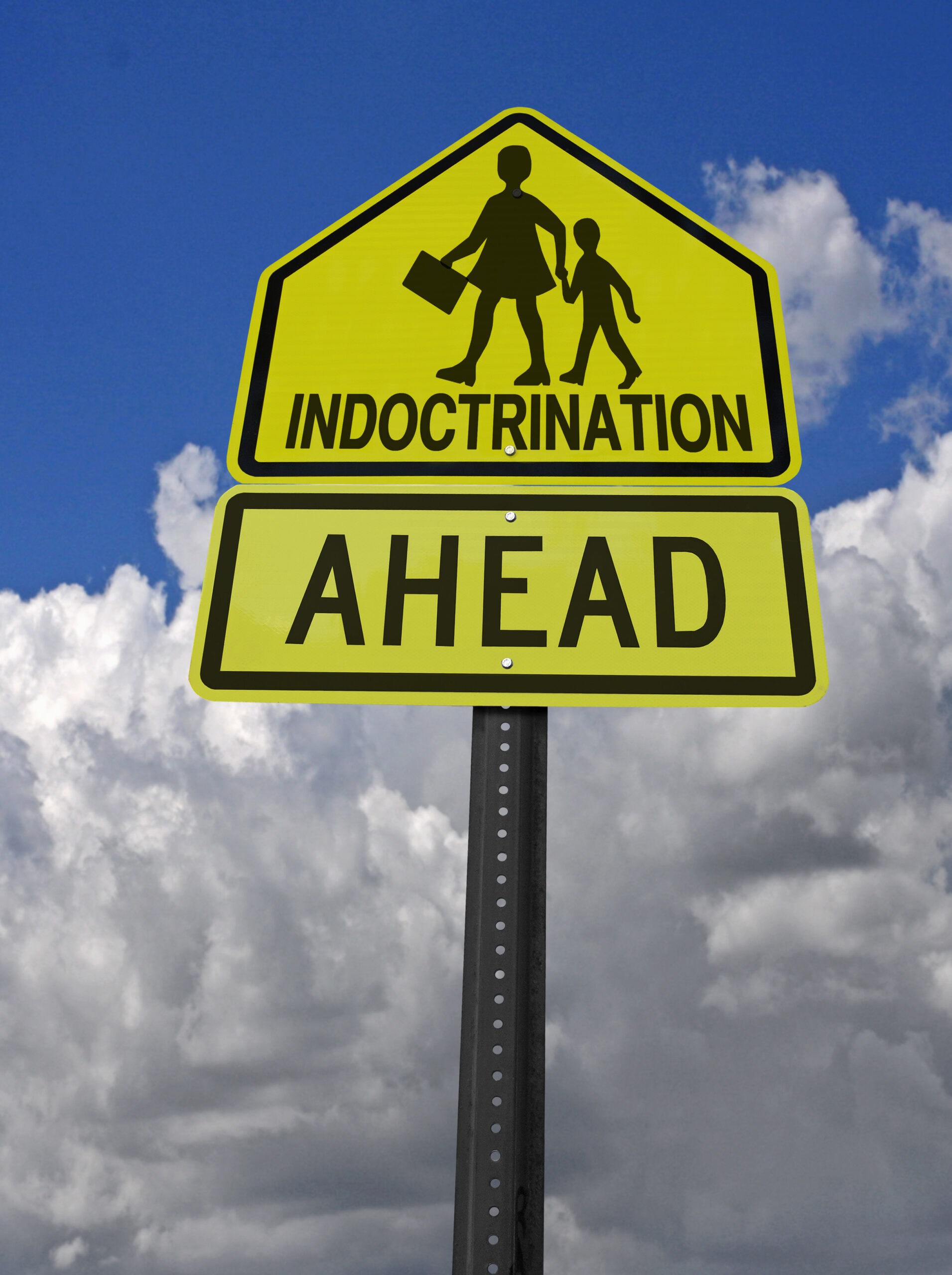
Signs of indoctrination in public education systems include the promotion of specific political ideologies, censorship of diverse viewpoints, and the use of curriculum that emphasizes conformity to particular beliefs over critical thinking.
For generations, the public school system has been celebrated as the foundation of democracy, where children from diverse backgrounds come together to acquire critical thinking and civic participation skills. But recently, a growing chorus of parents, scholars, and concerned citizens has begun to raise a provocative question: When does education end and indoctrination begin?
The debate over the role of public schools in shaping children’s values has been ongoing, but it has intensified significantly. As classrooms increasingly become battlegrounds for broader societal “culture wars,” it is crucial to objectively examine the delicate balance between academic instruction and ideological shaping.
The Difference Between Instruction and Indoctrination
To have a meaningful conversation, we must first define our terms. Instruction is the process of teaching students how to think—providing them with diverse perspectives, historical facts, and the logical framework necessary to analyze the world around them.
Indoctrination, by contrast, is teaching students what to think. It occurs when a curriculum moves away from neutral inquiry and toward the promotion of a specific social, political, or moral agenda. When a classroom environment discourages questioning, marginalizes alternative viewpoints, or presents subjective theories as objective truths, it crosses the line from schooling to social engineering.
The “Hidden Curriculum”
Critics of modern public education often point to what sociologists call the “hidden curriculum.” This refers to the unwritten, unofficial lessons that students learn through the school environment.
In many schools, this hidden curriculum now includes a heavy emphasis on identity politics, specific historical interpretations that view the past through a singular lens, and social theories that prioritize collective group identity over individual merit. When these concepts are introduced not as topics for debate but as moral imperatives that every student must adopt, the classroom begins to look less like a laboratory of ideas and more like a pulpit.
The Erosion of Parental Authority
At the heart of the indoctrination debate is the fundamental question of who is entitled to guide a child’s moral and ethical development. For centuries, this right was understood to reside with the family.
When schools implement policies—such as withholding information from parents regarding a child’s social transition or introducing complex, age-inappropriate sexual concepts—they erode the trust between the institution and the community. By bypassing parents, the school system effectively asserts that it knows better than the family, positioning the state as the primary arbiter of a child’s values.
The Cost of a Closed Mind
The risk of schools’ ideological capture is not just that students may learn the “wrong” things; it’s that they can’t engage with the “right” questions.
If we shield children from uncomfortable ideas, or conversely, force-feed them dogmatic stances on complex issues, we produce graduates who lack intellectual resilience. A generation that has been taught to fear disagreement rather than debate it is ill-equipped for the realities of a free society. Democracy requires the ability to navigate complex, messy, and often conflicting viewpoints. If our schools stop teaching students how to debate, they cease to be the engines of democracy they were intended to be.